Developer job application template
Remote-friendly, small teams, real products.
- Kind of form
- Application
- Questions
- 8
- Required
- 5
Start the 14-day trial, then choose Developer job application under Form templates. Each field, word and colour can be changed.
Who uses it
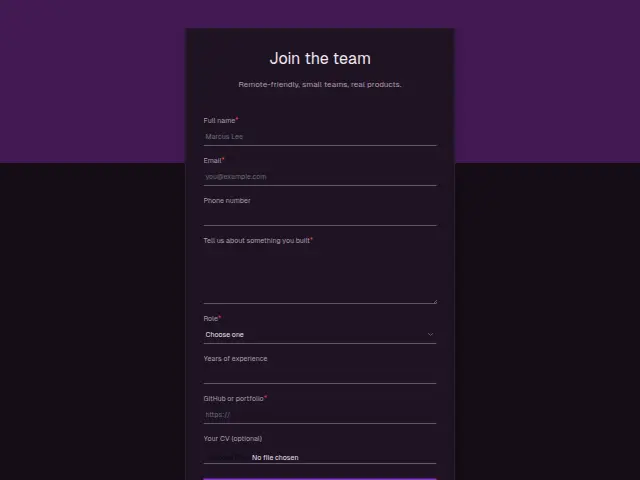
A small agency hiring developers wants to see work, and the form puts that first. “Tell us about something you built” is required, and the code or portfolio link is a required URL field. The description sets the scene, remote-friendly, small teams, real products.
Role is required (Frontend, Backend, Full stack, Mobile, Design), “Years of experience” is a number, and the CV upload is optional, because the link and the build story usually say more. Phone number is optional too, which suits candidates who would prefer email while they are still in another job.
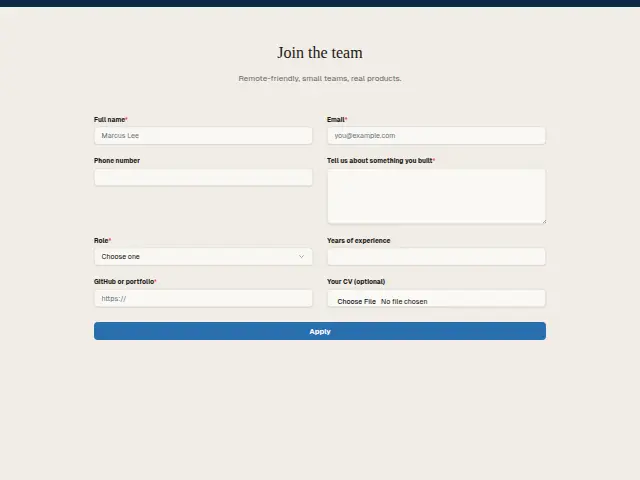
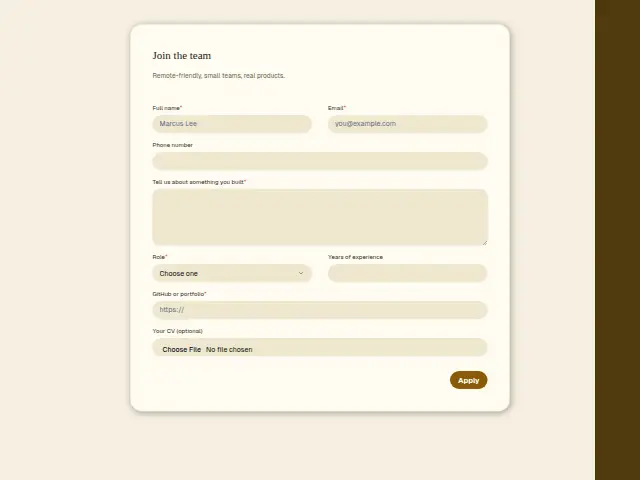
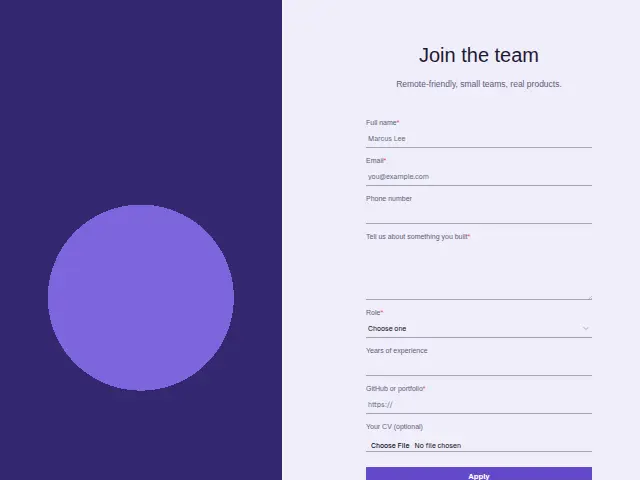
The same form, in 6 layouts
Same questions, same words. Pick the arrangement that suits the page it sits on; the layout can be changed later too.
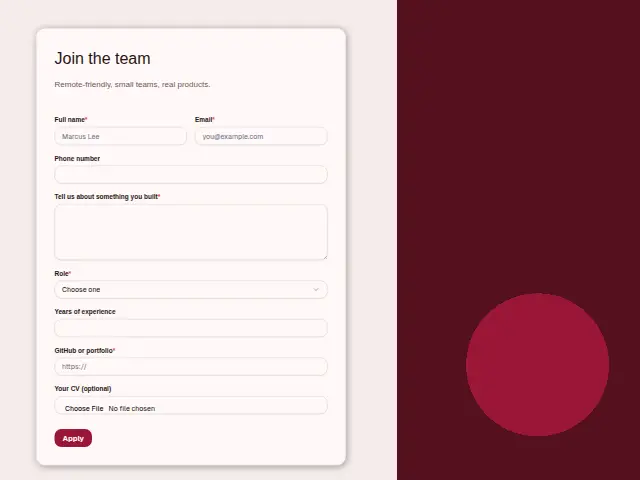
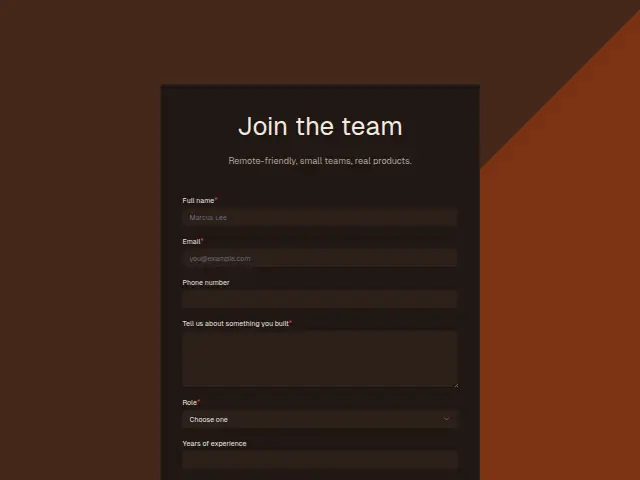
Field guide
8 questions, each with what the business does with the answer.
| Question | Type | Required |
|---|---|---|
| Full nameHeads the row Applicant intake adds to the hiring sheet for each candidate. | Short text | Yes |
| EmailGets the instant acknowledgement, which suits candidates still in another job who prefer email. | Yes | |
| Phone numberOptional, so a candidate can apply without giving a number while still employed elsewhere. | Phone | No |
| Tell us about something you builtRequired, a build story the hiring lead reads before the code link, often more telling than a CV. | Long text | Yes |
| RoleFrontend · Backend · Full stack · Mobile · DesignA branch on Design can send those applications to a design reviewer, and the rest to engineering. | Dropdown | Yes |
| Years of experienceA number, so a workflow can compare it with the minimum set as an Applicant intake must-have. | Number | No |
| GitHub or portfolioRequired link the reviewer opens first, since the code or the portfolio is what gets judged. | Website | Yes |
| Your CV (optional)An optional file kept with the application in Results, for reviewers who still want one. | File upload | No |
What happens after someone sends it
Applicant intake fits, acknowledging each application at once, checking it against the agency’s must-haves, logging it and sending it to whoever hires. A must-have can be a role the team is short of, or a minimum on Years of experience, which a workflow can compare as a number.
Applicants for Design can go to a different reviewer from the engineering roles, and a branch on Role does that without anyone sorting the inbox. Each application also lands as a row in the Google Sheet Applicant intake logs to, so the hiring lead can sort by role and years without opening every response.
Each response adds the person to the client’s CRM, shows in their portal’s Leads and sends you a new-lead alert; if nobody has answered after 15 minutes, you hear again. Any workflow you start from the form runs the moment it arrives.
Library workflows that start from a form like this: Applicant intake.
Its answers can also go straight to another app with a starter: ActiveCampaign, Airtable, Asana, Attio, Brevo, ClickUp, Close and Discord, among others.
Trades that use it
The trade page that lists this form, with the trade’s other forms and workflows.
Workflows for software development agency
What runs when this form is sent: playbooks and packs written for the same trade.
- PackSoftware development agencyRetainer dev agency packSorts support tickets, turns requests into tasks, and recovers failed payments.






 3 workflows · 12 steps · 7 apps
- PackSoftware development agencyProject-based dev agency packAnswers leads fast, briefs each call, follows up quotes and kicks off won projects.
 Airtable
 Calendly
 4 workflows · 27 steps · 8 apps
- PlaybookSoftware development agencyAfter-hours answeringAnswer customer messages at any hour from the business’s own facts, and hand anything else to a person with a holding reply.
 Telegram5 steps · 3 apps
Related forms
See them all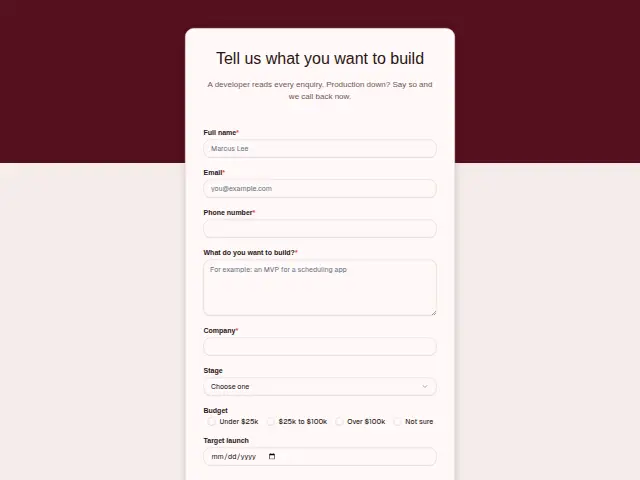 Software project enquirySoftware development agency8 fields · Enquiry
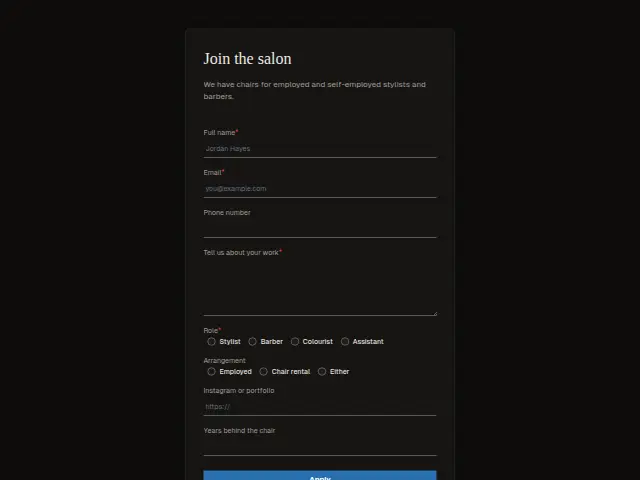 Stylist chair applicationHair salons and barbershops8 fields · Application
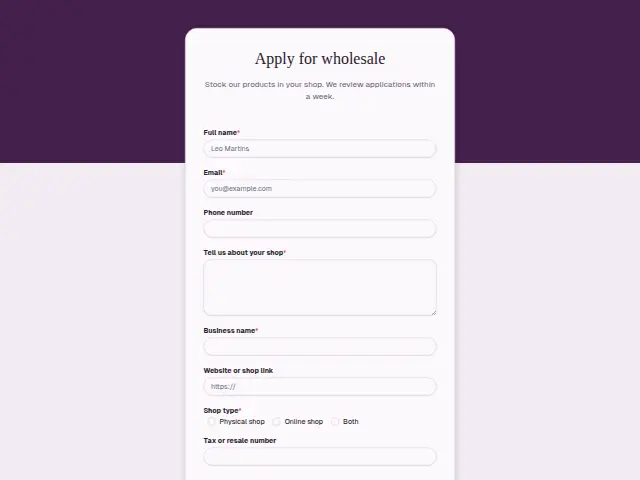 Wholesale account applicationE-commerce8 fields · Application
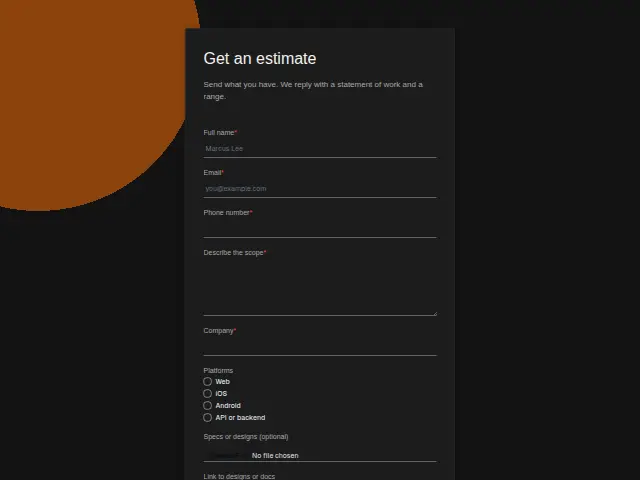 Software project estimate requestSoftware development agency8 fields · Quote request
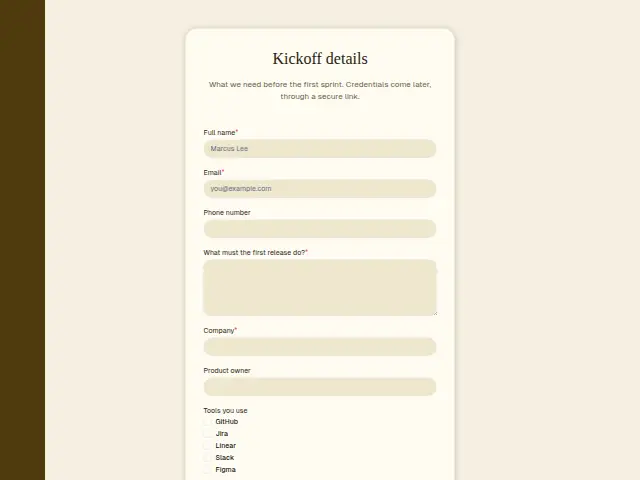 Software client onboardingSoftware development agency8 fields · Registration
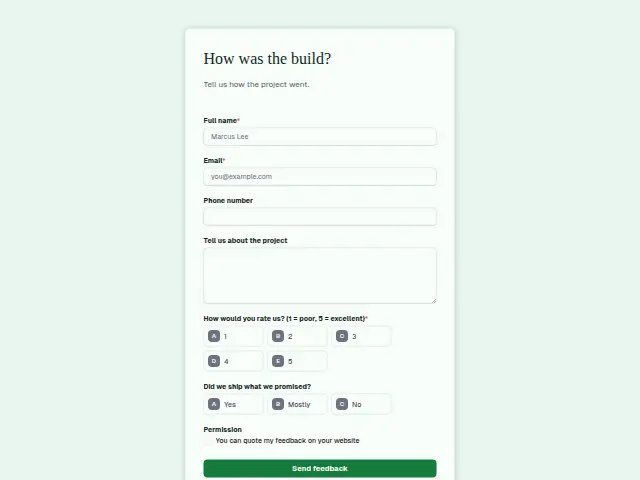 Software project feedbackSoftware development agency7 fields · Feedback
Thrum is cooking.
Get early access and you’ll be among the first in. Early members get a launch perk.